EHR Software Development: Complete Guide to Features, Cost, Compliance & Process in 2026

What is an EHR System in Healthcare?
An Electronic Health Record (EHR) system is a digital platform that stores, manages and shares comprehensive patient health information amongst multiple care providers in real time. The EHR software development in healthcare is different from traditional paper records that are in a filing cabinet within a single clinic, because it is supposed to be live, interconnected and accessible wherever care is being delivered. Whether it’s a hospital in Toronto, a specialist clinic in Ontario or a virtual consultation across Canada.
A good EHR platform generally has a patient’s entire medical history, lab test results and diagnostic reports, medication lists and prescription records, immunization history and allergy alerts, vital signs and progress notes, appointment schedules and billing and insurance information- all in one place, updated in real time.
EHR system development is essential for modern healthcare, and not just because it provides the convenience of digitization. It is the clinical effect. When a doctor can see the whole history of a patient in seconds rather than waiting for records to be faxed or trying to recall everything, better, faster decisions are made. And that translates into better outcomes for patients, which is the real value at the core of every dollar spent on an EHR.
The global EHR market is expected to reach $53 billion by 2033, according to Grand View Research, a clear sign that healthcare organizations around the world are viewing EHR software as core infrastructure, not optional technology.
EHR and EMR- Understanding the Difference
One of the most common questions heard in healthcare technology is: what is the difference between EHR and EMR? The quick answer is scope.
An Electronic Medical Record (EMR) is a digital version of the traditional paper-based medical record of the patient in a single practice or healthcare facility. It replaces the paper chart but it doesn’t travel with the patient. Your EMR doesn’t go with you if you change doctors or go to a specialist.
An Electronic Health Record (EHR) is much broader. It’s designed to follow the patient through providers, facilities and care settings. All of these providers, a primary care physician, a specialist, a lab, a pharmacist and a hospital can access and update an EHR, all sharing one secure, up-to-date record. Many times patients are able to access their own records via a patient portal.
| Feature | EHR | EMR |
| Scope | Across multiple providers and facilities | Within a single practice or facility |
| Data Sharing | Highly compatible | Limited to the originating organization |
| Patient Access | Often available via self-service portals | Typically not patient-facing |
| Compatibility | Built for integration using HL7/FHIR standards | Minimal integration capability |
| Best For | Hospital networks, multi-location clinics, care ecosystems | Small practices, single-provider offices |
EHR software development is the right investment for any healthcare organization that is serious about care coordination, reducing duplication and delivering a connected patient experience. EMRs have a narrower purpose and are increasingly being upgraded or replaced by full EHR platforms.
Types of Electronic Health Records (EHR) Systems
Before you begin any EHR system development project, you need to understand the different system models that are available. The right architecture choice will depend entirely on the size, budget and operational needs of the healthcare organization.
On-premise (Physical-hosted)
The EHR data resides on the servers owned by the healthcare provider. The organization manages all hardware procurement, maintenance and IT management. This approach offers maximum control but with an increased upfront infrastructure cost and increased ongoing IT overhead.
Cloud- Based EHR
The model with the most adoption in 2026. The system is hosted on compliant cloud infrastructure (AWS, Azure, Google Cloud, etc) and accessed via browser or mobile app. Cloud-based EHR software systems provide you with real-time access from anywhere, reduced IT overhead, automatic updates, and much better scalability. For startups and telehealth platforms for growing practices, this is generally the way to go.
Dedicated Remote EHR
Hosted at an independent data center, separate from the healthcare provider’s office. This offers more flexibility in terms of customization than cloud-based models, while still removing the headache of managing physical hardware in-house.
Subsidized EHR
Managed by a third-party entity such as a larger hospital network or a government agency that covers some of the costs. This model is designed to make EHR adoption more accessible to smaller clinics and rural practices that might otherwise have difficulty affording the investment.
The first step is to understand these models. Next, you should match your EHR software development services with the proper development strategy from the very beginning.
Why Invest in EHR Software Development in 2026?
There has never been a better time to invest in the development of EHR software. And here’s why healthcare organizations across Canada, the US and worldwide are making that commitment now.
Patient Expectations Have Evolved
Patients today expect their healthcare provider to offer the same digital experience as their bank or favorite app. They want online booking, secure messaging with their doctor, easy access to their lab results, and transparent billing. All of this is offered by a robust EHR platform.
Regulatory Pressure is Increasing
Governments in the US, Canada and the EU are aggressively promoting, and in many cases mandating, the use of digital health records. In the US, the HITECH Act created incentive programs to encourage certified EHR adoption. Canada is on a similar path with an initiative that backs electronic health data infrastructure from coast to coast.
Clinical Outcomes Improve with Better Data
Physicians make fewer errors, order fewer duplicate tests and make diagnoses faster with complete, accurate and real-time patient data. Direct association between EHR systems and measurable improvements in quality of care.
Operational Efficiency Drives Financial Returns
EHR implementation is an investment in the short term. In the long run it reduced transcription costs significantly, cut administrative overhead, improved accuracy in claims management and optimized staff workflows. That efficiency gain is important for healthcare organizations with thin margins.
If you want to learn more about the impact of technology on the delivery of clinical care, see our guide to types of healthcare software and how different platforms interact.
Must-Have Features of EHR Software
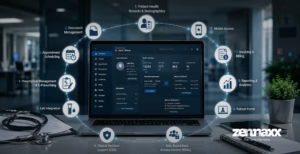
Every EHR platform is unique, built for the specific needs of the healthcare organization it supports. Any robust EHR software system has to include certain core features:
Patient Health Records & Demographics
The foundation for any EHR, with patient profiles including medical history, diagnoses, allergies, immunizations, vital signs, and care notes, all structured and ready for use.
Document Management
The ability to upload, store and retrieve documents across the whole care team in multiple formats such as text, images, PDFs and DICOM formats for MRI and CT scans.
Appointment Scheduling
Providers see upcoming appointments, patient details and preparation notes on a dashboard view. Real time patient scheduling through self-service portal.
Prescription Management and E-Prescribing
Doctors can electronically prescribe medications, check for drug interactions against the patient’s existing medication list and send prescriptions directly to a patient’s preferred pharmacy- all without a paper prescription pad.
Lab Integration
EHR software integrated directly with lab systems, allowing for test results to flow automatically into the patient record as soon as they are ready to eliminate phone calls, faxes and missed results.
Clinical Decision Support (CDS)
Alerts and recommendations, based on real-time evidence, assist physicians at the point of care in identifying potential errors such as harmful drug interactions, incorrect dosages, or missed diagnoses.
Role-Based Data Access Control (RBAC)
Not all care teams need access to the same data. A robust EHR platform allowed for strict access restrictions so nurses, physicians, administrators and billing staff only saw what was relevant to their role.
Patient Portal
A secure self-service portal where patients can view their records, download test results, message their care team, request prescription refills and manage appointments.
Reporting & Analytics
Dashboards that give providers and administrators with a clear view of clinical performance, patient outcomes, appointment volume, revenue cycle health and population health trends.
Invoicing & Billing
Automate invoicing, insurance claims management and payment processing to reduce billing errors and speed up revenue cycle performance.
Mobile Access
A fully functional mobile version of the EHR, because doctors don’t always sit at desks and patients increasingly want to manage their health from their smartphones.
Role of Artificial Intelligence in EHR Systems
AI in EHR systems is no longer an experimental trend. It’s quickly becoming a standard feature in next-generation EHR software, and healthcare organizations investing early are seeing clear clinical and operational advantages.
Here’s how AI is actively changing EHR platforms today:
AI-Powered Clinical Documentation
Documentation is one of the most time-consuming parts of any physician’s day. AI-driven voice-to-text software can transcribe patient encounters in real time, auto-populate clinical notes and even suggest diagnosis codes- significantly reducing administrative burden and clinician burnout.
Predictive Analytics and Early Warning Systems
AI models identify patients at risk of deterioration, readmission or disease progression by analyzing patterns across thousands of patient records, providing care teams the opportunity to intervene proactively rather than reactively.
Clinical Decision Support Enhancement
AI elevates traditional clinical decision support by not only flagging known drug interactions, but by learning from historical outcomes across large patient populations and surfacing context-specific recommendations.
Automated Workflow Optimization
From intelligent appointment scheduling that anticipates no-show rates to automated pre-authorization requests, AI reduces the manual labor involved in running a healthcare operation.
Natural Language Processing(NLP)
NLP enables EHR systems to pull out clinically relevant information from free-text notes, patient communications, and unstructured data, transforming data that was previously inaccessible into searchable, analyzable records.
While the addition of AI to EHR system development does add complication and cost, the long-returns in time saved, errors prevented and care quality improved make it a compelling investment for healthcare organizations building for the future.
Step-by-Step EHR System Development Process
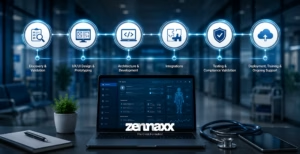
Building a custom EHR platform is a well-structured process, which needs healthcare domain knowledge, technical depth, and strict compliance awareness all the time. Here’s how an experienced development team does it:
Discovery & Validation
The team begins by developing a thorough knowledge of the healthcare organization’s workflows, patient population, regulatory environment, and existing systems. The result of this phase is a defined feature roadmap, technology recommendations and validated scope of the project.
UX/UI Design & Prototyping
Healthcare interfaces must be easy to use, accessible and efficient for busy physicians, administrative staff and patients of all ages. Wireframes and interactive prototypes are created and reviewed before anything is coded.
Architecture & Development
The engineering team, having defined compliance, security, and scalability requirements in Phase 1, develops the core platform patient records, scheduling, clinical decision support, billing, reporting, and integrations in iterative development sprints.
Integrations
EHR integration services are key here. The platform integrates with laboratory systems, pharmacy systems, imaging platform (PACS), billing and insurance payers and if required existing hospital management software using HL7 and FHIR interoperability standards.
Testing & Compliance Validation
Rigorous testing guarantees functional correctness, security penetration testing, load performance and regulatory compliance testing (HIPAA, PHIPA (Ontario), PIPEDA (Canada) and HL7/FHIR conformance testing) are all validated prior to launch.
Deployment, Training & Ongoing Support
The EHR is deployed to production integrated with an existing system or launched fresh. Staff training, data migration from legacy records and go-live support are included in this phase. Once launched, the platform is maintained with regular security patches, feature enhancements and compliance monitoring.
In healthcare, a software mistake is not just a bug. It’s handled with clinical accuracy by a trusted software development company with proven experience in healthcare at every stage. It’s a risk to patient safety.
EHR Software Development Cost: What to Budget For
One of the first questions healthcare organizations ask is about the development cost of EHR software and rightly so. Honestly, it depends a lot on the feature scope, platform targets, integration complexity and compliance requirements. But here’s a realistic framework built on current development benchmarks:
Cost Ranges by Project Type
| Project Type | Estimated Cost Range |
| Basic MVP (single platform, core features) | $40,000 – $100,000 |
| Mid-Range Platform (multi-platform, integrations) | $100,000 – $ 300,000 |
| Enterprise-Grade EHR (AI, full integrations, multi-region) | $ 300,000 – $ 1000,000+ |
Key Factors That Drive EHR Development Cost
- Feature Set – The more advanced the platform (AI documentation, predictive analytics, remote monitoring) the greater the investment.
- Number of Platforms – Developing for web, iOS and Android at the same time increases development time and cost.
- Third-Party Integrations – Each connected system (lab, pharmacy, billing, imaging) increases scope and complexity.
- Compliance Architecture – HIPAA, PHIPA, PIPEDA and HL7/FHIR standards demand additional security layers and audit infrastructure.
- Cloud Infrastructure – HIPAA-eligible cloud hosting costs range from $200 to $2,000+ per month, depending on the volume of data and retention requirements.
- Ongoing Maintenance – Budget 15-20% of the initial development cost per year for updates, patches, and compliance monitoring.
Big cost insight: building compliance and security architecture into your EHR from the start is dramatically cheaper than retrofitting it later. Healthcare organizations that treat security as an afterthought routinely spend 3 to 5 times more on remediation than those that get it right the first time.
If you are looking for custom software development services for regulated healthcare environments, partnering with a specialized team will help protect your investment from day one.
EHR Integration Services: Getting Your Systems to Talk
Integration is one of the biggest challenges in EHR software development, and one of the most important to get right. A stand-alone EHR that doesn’t talk to the rest of your healthcare ecosystem is only delivering a fraction of its potential value.
EHR integration connects the EHR platform to outside systems using standard protocols. The two most important standards are:
- HL7 (Health Level 7) – a messaging standard for the exchange of clinical and administrative data between healthcare systems. Widely used for lab results and admission/discharge notices and medication orders
- FHIR (Fast Healthcare Interoperability Resources) – a newer API-based standard that allows for more flexible, real-time data exchange and is increasingly being mandated by regulators in the US and Canada
Common EHR Integrations
- Laboratory Information Systems (LIS) for direct delivery of test results
- E-prescribing and medication tracking pharmacy platforms
- Imaging Data Radiology and PACS Systems
- Insurance claims and revenue cycle management platforms
- Continuity of virtual care telehealth platforms
- Wearables and remote patient monitoring (RPM) devices
- Health Information Exchanges (HIEs) for sharing data across organizations
Getting EHR integration services right from the start avoids data silos, eliminates duplicate data entry and creates the truly connected care experience that providers and patients alike need.
If your organization is developing or upgrading a telehealth platform, you might want to check out our guide to telehealth software to learn how EHR and telehealth work best together.
Compliance & Security in EHR Development

Patient health information is some of the most sensitive data in existence and is handled by EHR software systems. That’s why compliance and security aren’t optional features. They are the foundation.
Key Compliance Frameworks
- HIPAA (USA) – Governs the privacy and security of Protected Health Information (PHI) for patients or providers in the US.
- PHIPA (Ontario, Canada) – Ontario’s Personal Health Information Protection Act, which governs the collection, use and disclosure of personal health information in Ontario
- PIPEDA (Canada) – Federal privacy law that applies to the handling of personal information by private-sector organizations
- GDPR (EU) – Applies to any EHR for patients in Europe
- ONC-ATCB Certification (USA) – Required for EHR systems to be compliant with US federal incentive programs
- HL7 & FHIR Standards – Data formatting and interoperability standards
Non-Negotiable Security Requirements
- All stored data is encrypted with AES-256
- All data in transit is encrypted with TLS 1.2 or higher
- All provider logins must require multi-factor authentication (MFA)
- Role based access control (RBAC) and audit logging
- Auto logout for idle users
- Regular penetration testing and third party security audits
- Disaster Recovery and Automated Encrypted Backup
A great healthcare app development company integrates these requirements into the architecture in the design stage rather than as an add-on after development is completed. For a fuller picture of compliance for healthcare apps, see our guide on HIPAA compliant app development for more in-depth coverage.
Pros and Cons of EHR Software Development
Like any significant investment in technology, developing an EHR system has significant benefits and significant challenges. Here’s a candid look at both:
Pros
Improved Patient Safety
EHR systems help avoid medication errors and identify dangerous drug interactions, while allowing all caregivers to view the same comprehensive patient history, making clinical decisions safer and more informed.
Greater Operational Efficiency
Automated scheduling, digital prescribing, simplified billing, centralized documentation cuts administrative burden freeing clinical staff to focus on patient care not paperwork.
Better Care Coordination
When the entire care team has access to one live patient record, communication gaps close. Referrals, handoffs and follow-ups become smoother and more reliable.
Regulatory Compliance Support
Modern EHR platforms are designed to ease compliance with HIPAA, PHIPA, PIPEDA, and HL7, decreasing the legal and financial risk of data mishandling.
Scalability
A well-architected EHR platform can scale as the organization adds new locations, providers, specialties, or integrations without having to completely rebuild.
Cons
High Upfront Investment
Developing a custom EHR requires a significant initial outlay for design, development, compliance infrastructure, and testing.
Complex Data Migration
Moving to a new EHR from paper records or older systems requires a deliberate, phased data migration that takes time and specialist expertise to do safely.
Staff Training Requirements
New EHR systems mean training physicians, nurses, administrative staff, and billing teams. Bad onboarding is a leading cause of EHR implementations not performing as expected.
Ongoing Compliance Maintenance
Regulations may change. Healthcare systems are evolving. Your EHR will require ongoing compliance monitoring, security updates, and periodic re-audits to remain current.
Interoperability Issues
EHR integration with legacy hospital systems, third-party labs and insurance platforms can be technically complex, especially in healthcare ecosystems that rely on old infrastructure.
To gain a better understanding of building integrated healthcare systems, see our healthcare app development overview to get the full picture of how EHR fits into the wider digital health landscape.
How to Choose the Right EHR Development Partner

Selecting the right EHR developers is one of the most consequential decisions a healthcare organization can make. The wrong partner brings delays, compliance gaps, technical debt, and a platform your staff doesn’t want to use. The right partner provides a solution that works from day one and grows with you year after year.
Here’s what to look for:
Deep healthcare domain expertise – It’s not just software expertise. Your development partner must be familiar with clinical workflows, healthcare compliance, EHR interoperability standards, and the regulatory environment of your jurisdiction (Ontario, Canada, US, etc.)
Compliance architecture from day one – Ask how they do compliance with HIPAA, PHIPA and PIPEDA A team that builds security and compliance into the architecture from the very beginning is much more reliable than a team that adds it at the end.
Proven EHR integration experience – Ask for examples of HL7 and FHIR integrations they’ve built. EHR integration services require a certain expertise that not every development team possesses.
Transparent process and milestone-based delivery – You should always know what you are building, when it will be delivered and how much it will cost. If you see vague timelines and opaque pricing run.
Maintenance and Support After Launch – EHR development does not end at the launch. Your partner must provide constant monitoring, updates and maintenance of compliance.
Healthcare clients references – Ask to speak to companies they’ve provided EHR or healthcare software to, especially in Canada or similar regulated markets.
Zennaxx is a healthcare app development company and a trusted software development company with a strong experience in building compliant and scalable healthcare platforms for organizations across Canada, including Toronto and Ontario. Whether you need custom EHR system development, EHR integration services, telehealth platforms, or patient-facing apps, our team offers custom software development services designed for the unique needs of the healthcare industry.
Looking for a development partner with clinical, technical and regulatory knowledge of EHR? Call our healthcare team today.
Final Thoughts
EHR software development is at the crossroads of clinical care and modern technology, and doing it right influences patient outcomes, operational performance and organizational risk. The healthcare organizations that will lead in digital health over the next decade will be those that invest in well-architected, compliant, and integrated EHR systems.
If you are a hospital network in Toronto, a growing clinic across Ontario, a healthcare startup anywhere in Canada, or a digital health entrepreneur with a compelling vision, building the right EHR platform starts with choosing the right development partner.
Zennaxx is a trusted healthcare app development company and a dedicated software development company providing custom software development services to healthcare organizations that need secure, scalable and regulation-ready platforms. The team is tailored for this kind of work from initial discovery through to launch, integration and ongoing support.
Ready to begin your EHR journey? Get in touch with our healthcare development team today.
FAQs
1. How Much Does It Cost to Build an EHR System?
The cost of EHR software development depends on the scope and complexity of the project. A simple MVP with core features like patient records, scheduling, and e-prescribing can be developed for $40,000 to $100,000. A mid-range platform with multiplatform access, lab integrations and billing automation typically costs $100,000 to $300,000. Enterprise EHRs with AI capabilities, multi-region compliance and extensive third-party integrations can cost more than $300,000, even $1 million or more. The total lifecycle cost is made up of compliance infrastructure, cloud hosting, security audits and ongoing maintenance. The best way to get an accurate estimate is to talk to an experienced software development company that specializes in healthcare and discuss your specific needs.
2. How Long Does EHR System Development Take?
The time frame is based on the complexity of the platform. A lean MVP can be delivered often in 4-6 months. Typically, mid-tier EHR with integrations and multi-platform support takes 6-12 months. Enterprise-grade systems with AI capabilities, complex integrations, and multi-region regulatory compliance can take 12-24 months. A clear requirements specification, a compliance-ready architecture plan and an experienced EHR developers team help reduce timelines and avoid costly mid-project pivots.
3. What Is the Difference Between Custom EHR Development and Off-the-Shelf EHR Software?
EHR solutions such as Epic, Cerner, or eClinicalWorks are off-the-shelf products that can be deployed faster for common use cases, but they come with ongoing costs for licensing, limited customization, and vendor-dependent integration roadmaps. Custom EHR software development provides a platform that’s designed for your specific clinical workflows, patient population and compliance needs, without any ongoing license fees and with full ownership of your data architecture. For larger organizations, multi-specialty networks, and healthcare startups building differentiated products, custom development almost always provides better long-term value.
4. What Compliance Standards Does EHR Software Need to Meet in Canada?
In Canada, EHR software must be compliant with PIPEDA (the federal Personal Information Protection and Electronic Documents Act) and PHIPA (the Personal Health Information Protection Act) in Ontario. Organizations that provide services to US patients must also comply with HIPAA. At the data exchange level , interoperability is governed by HL7 and FHIR standards . Moreover, the cloud infrastructure that hosts EHRs must be configured within compliance-eligible boundaries, and default cloud settings are usually insufficient. This is when working with a healthcare app development company that understands Canadian healthcare regulation comes in handy.
5. How Does EHR Software Integrate With Other Healthcare Systems?
EHR integration links the EHR to laboratory systems, pharmacy platforms, radiology (PACS), billing and insurance systems, telehealth tools, remote patient monitoring devices, and health information exchanges (HIEs) through standardized protocols, mostly HL7 (for clinical messaging) and FHIR (for API-based data exchange). A proper integration strategy breaks down data silos, eliminates duplicate data entry and creates a connected care experience for providers and patients alike. One of the highest value investments can be found within healthcare organizations, with properly planned EHR integration services. If you want to learn more about the technology behind this, then check out our guide on healthcare LMS where we talk about complementary digital health platforms working together in an integrated ecosystem.