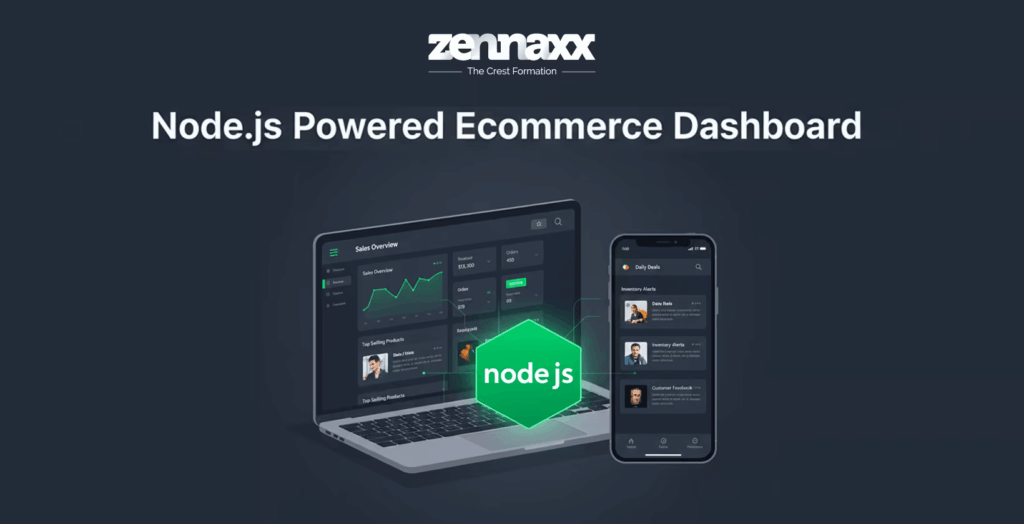
The eCommerce industry has been undergoing rapid changes. Businesses of all sizes, from startups creating niche online stores to big companies handling thousands of transactions, require a platform that is fast, scalable, secure, and prepared for the future.This growing demand has made Node JS eCommerce development one of the favorite solutions for modern web and app development projects.
Node.js has stopped being a backend runtime that is only used for server-side operations. It has now become an efficient base to create fast, scalable, and high performance eCommerce websites and apps that can smoothly deal with instant traffic, complicated APIs, and great user experiences.
Let’s dive into why Node.js fits like a glove in eCommerce projects, its major advantages, system designs, top practices, and how companies can make smart tech choices. Especially when working with a Node JS Development Company in Canada.
What Is Node JS Ecommerce Development?
Node.js is a JavaScript runtime built on Chrome’s V8 engine. It helps developers to build fast, and scalable servers using JavaScript.
When used for eCommerce, Node JS Ecommerce development enables businesses to create:
- High-performance online stores
- Real-time shopping experiences
- Scalable backend systems
- API-driven web and mobile apps
Unlike traditional server technologies, Node.js uses a non-blocking, asynchronous architecture, which is why it is very efficient when handling multiple requests simultaneously.
Why Node.js Is a Smart Choice for Ecommerce Projects
Modern eCommerce platforms help to manage product catalogs, user sessions, payment gateways, inventory systems, and analytics. Node.js is built for this type of workloads handled by businesses.
Here’s why businesses increasingly choose Node JS Web Development Services for eCommerce.
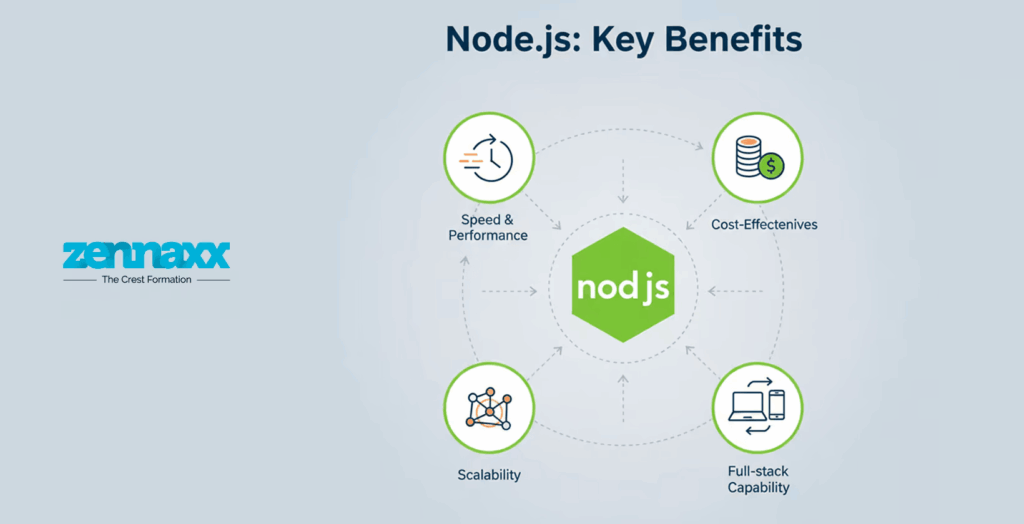
Key Benefits of Node JS Ecommerce Web or App Projects
1. High Performance for Traffic-Heavy Platforms
Ecommerce sites often get huge unexpected traffic during sales, festivals or marketing. Node.js can handle many requests at the same time thus its performance does not get slower.
Its event-driven architecture ensures:
- Faster page loading
- Smooth checkout processes
- Minimal downtime during peak traffic
This makes Node.js ideal for both small online stores and large-scale marketplaces.
2. Real-Time Capabilities
Real-time features are becoming standard in modern eCommerce apps:
- Live order tracking
- Inventory updates
- Real-time notifications
- Chat support
Node.js supports WebSockets and real-time data streaming, making it easier to deliver dynamic shopping experiences that keep users engaged.
3. Scalability for Growing Businesses
Scalability is an essential factor that comes into play as an eCommerce business expands. Node.js makes it possible for applications to scale in a horizontal manner by simply adding more resources without the need for significant changes in the architecture.
With the support of microservices and cloud environments, businesses can:
- Scale specific features independently
- Reduce system bottlenecks
- Optimize operational costs
This flexibility is one reason many businesses partner with a Node JS Development Agency in Canada for long-term growth planning.
4. Cost-Effective Development
Node.js uses JavaScript for both frontend and backend development. This reduces:
- Development time
- Team size requirements
- Overall project costs
Combining Node.js with reusable components and open-source packages makes it a very affordable choice. This is especially true when comparing ecommerce website costs for startups and mid-sized companies.
5. Rich Ecosystem and Community Support
Node.js offers access to thousands of open-source libraries through NPM (Node Package Manager). These packages help speed up development for:
- Payment gateways
- Authentication systems
- Security layers
- API integrations
A strong global developer community ensures regular updates, security patches, and long-term stability.
Node JS Ecommerce Architecture Options
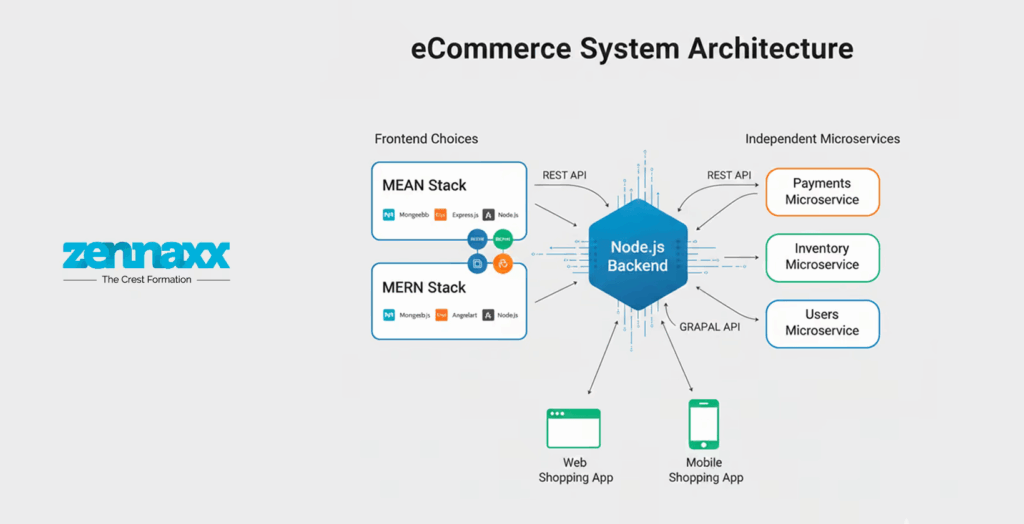
Choosing the right architecture is equally important as technology. Node.js allows different architectures based on business needs.
MEAN or MERN Stack for Ecommerce
One of the most popular approaches is using Node.js with modern JavaScript stacks.
MEAN Stack
- MongoDB
- Express.js
- Angular
- Node.js
MERN Stack
- MongoDB
- Express.js
- React
- Node.js
Deciding on Angular or React? Consider these points:
- Are you developing a large-scale application and need a very structured framework? In this case, Angular should be your choice.
- React gives you more flexibility and this is why it achieves quicker UI rendering for very interactive interfaces.
Both technologies allow developers to build applications quickly, scale the projects efficiently, and have a proper data flow.
Microservices Architecture
For complex eCommerce platforms, microservices architecture works exceptionally well with Node.js.
Benefits include:
- Independent feature deployment
- Better fault isolation
- Easier system maintenance
Each service, such as payments, inventory, or user management, runs independently and communicates through APIs.
API-First Ecommerce Development
Modern eCommerce platforms often rely on APIs to serve:
- Web applications
- Mobile apps
- Third-party integrations
Node.js is the perfect choice for building RESTful and GraphQL APIs that are fast, secure, and scalable.
Best Practices for Node JS Ecommerce Development
To get the most value from Node.js, businesses should follow proven development best practices.
1. Focus on Performance Optimization
Use caching solutions like Redis to store frequently accessed data. This helps to reduce server load and improve response time.
Database optimization, indexing, and efficient queries play an important role in performance.
2. Prioritize Security from Day One
Ecommerce platforms handle sensitive data. Like:
- HTTPS encryption
- Secure authentication methods
- Input validation
- Rate limiting to prevent attacks
Security should never be an afterthought in Node JS Ecommerce projects.
3. Use Server-Side Rendering for SEO
Search engine visibility is a must for online stores. Server-side rendering improves:
- Page load speed
- Search engine indexing
- User experience
This is helpful for content-rich product pages.
4. Adopt Modular Code Structure
Breaking the application into reusable modules. It helps to improves:
- Code readability
- Maintenance
- Team collaboration
It also reduces long-term development costs.
5. Implement Continuous Testing and Monitoring
Continuous testing through automation helps to confirm that recent changes do not impair the previously implemented features. Performance monitoring tools can be instrumental in the early identification of issues, thus helping to keep the platform stable.
Why Choose Node JS for Ecommerce in Canada?
Canada has a rapidly growing digital economy, and businesses increasingly rely on modern tech stacks to stay competitive. Working with a Zennaxx offers advantages such as:
- Expertise in scalable architectures
- Knowledge of regional compliance requirements
- Experience with global eCommerce markets
A reliable Node JS Development Agency in Canada can help businesses design, build, and maintain future-proof eCommerce platforms.
Future of Node JS Ecommerce Development
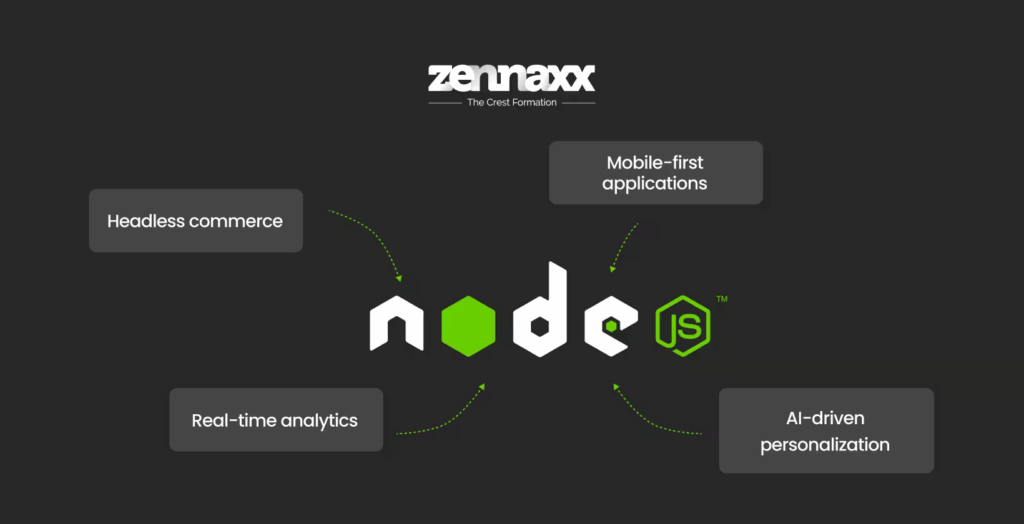
Node.js will be a key technology underpinning the following areas in the future of eCommerce:
- Headless commerce
- Mobile-first applications
- AI-driven personalization
- Real-time analytics
Due to its adaptability, efficiency, and thriving community, Node.js is sure to be a significant resource for both web and mobile eCommerce initiatives over the long.
How Zennaxx Can Help
Node.js has been demonstrated to be a very efficient technology when it comes to developing up-to-date eCommerce websites and applications. It provides businesses, among other things, with high performance and scalability, lower costs, and a more efficient workforce. These are all characteristics necessary to thrive in today’s digital marketplace.
If you are considering an eCommerce project from scratch or just renovating a platform, selecting the correct architecture and adhering to the best practices is essential. Zennaxx assists in determining the suitable strategy and development approach, Node JS Ecommerce solutions. We help your business to deliver user-friendly experiences as well as business growth that is sustainable.
FAQ’s
-
- Is Node.js suitable for large-scale eCommerce platforms?
-
- Which frontend framework is better for Node.js eCommerce. Angular or React?
-
- Can Node.js be used for mobile eCommerce apps?
-
- How secure is Node.js for online stores?