Native vs Cross Platform: Which Is the Right Choice for Your App in 2026?

Every business that decides to build a mobile app faces one fundamental question early on Native vs Cross Platform. It sounds technical, but the answer shapes your app’s performance, user experience, development timeline, and total investment. Get it right, and your app thrives. Get it wrong, and you’re rewriting code months down the line.
This guide explains everything you need to know about native vs. cross-platform mobile development in simple, easy-to-understand language. It is helpful for both startups making their first product and businesses that want to grow their online presence.
What is Native App Development?
When you develop a native app, you make a different app for each platform, like iOS and Android, using the tools and programming language that come with that platform. Swift or Objective-C is what you need for iOS. It is Kotlin or Java for Android.
When you pay for Native Mobile App Development Services, you are really making two separate apps that are made to work on their own platforms. You can use the camera, GPS, Bluetooth, and sensors on the device without any loss of speed or responsiveness.
Key characteristics of native app development:
- Made for iOS and Android separately
- Uses languages that are native to the platform (Swift, Kotlin)
- Best performance and access to hardware
- Best-in-class user experience that follows platform rules
- The cost of development goes up because the codebases are separate.
Native app development is best for apps where performance is a must, like real-time games, video streaming, fintech apps, or health monitoring tools.
What is Cross Platform App Development?
With cross-platform app development, you can write one codebase that works on both iOS and Android. Frameworks like Flutter, React Native, and Xamarin make this possible by letting developers use most of the same code on different platforms.
Cross Platform Mobile App Development lets businesses launch on more than one platform at the same time without having to do twice as much work. It is especially good for new businesses, MVPs, and companies that want to reach more people quickly and without spending too much money.
Key characteristics of cross platform app development:
- Single codebase for both iOS and Android
- Built with frameworks like Flutter, React Native
- Faster time to market
- Development that doesn’t cost too much
- Some native device features are hard to get to (but they’re getting better quickly)
Cross platform app development is great for content-driven apps, e-commerce sites, productivity tools, and early-stage products where speed and cost-effectiveness are the most important things.
Native vs Cross Platform App Development: A Direct Comparison
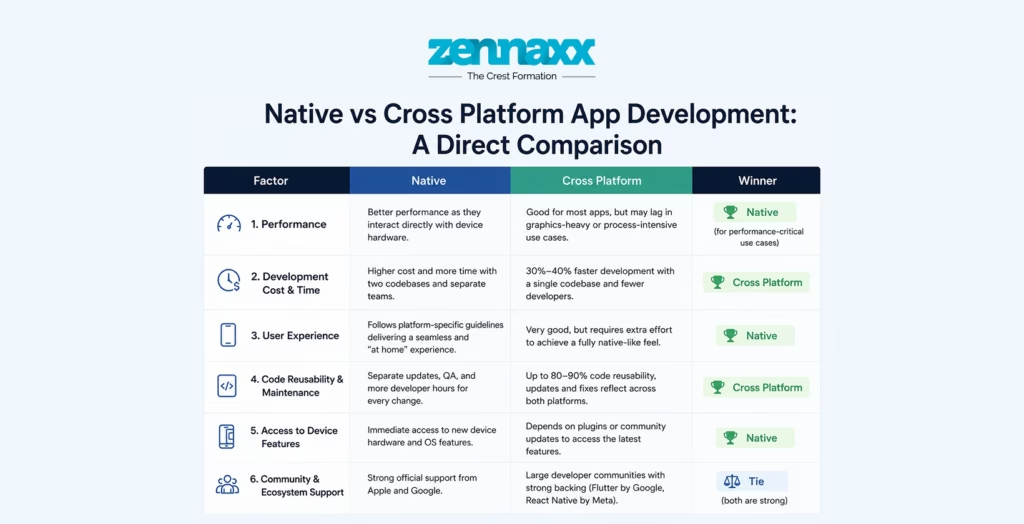
When you look at native and cross platform app development side by side and compare them on the things that matter most to businesses, it becomes easier to understand the difference.
Performance
Native apps are clearly better in this case. Because they are made for a specific platform, they talk directly to the device’s hardware without requiring a translation layer. This makes things load faster, animations run more smoothly, and the whole experience feels better.
Cross platform apps, while significantly improved in recent years (especially Flutter), still go through a bridge or intermediate layer. For most standard apps, the performance difference is barely noticeable. But for graphics-heavy apps or those requiring heavy background processing, native still leads.
Winner: Native (for performance-critical use cases)
Development Cost & Time
This is where cross-platform apps really shine. Development time has been removed by 30% to 40% when there is only one codebase for both platforms. You also need fewer developers, and you can update both platforms at the same time.
Native development essentially doubles the effort with two separate teams, two codebases, and two maintenance cycles. If you are also thinking about MVP development cost, cross platform is almost always the more practical starting point.
Winner: Cross Platform
User Experience
Native apps follow platform-specific design guidelines with Material Design for Android, Human Interface Guidelines for iOS. This means users on each platform get an experience that feels truly “at home.” Gestures, animations, and UI components all behave exactly as users expect.
Cross platform apps have improved dramatically, but achieving that fully polished, platform-authentic feel still requires extra effort from the development team.
Winner: Native
Code Reusability & Maintenance
Cross platform apps allow developers to reuse up to 80–90% of the codebase. Bug fixes, feature updates, and UI changes made once are reflected across both platforms. This significantly lowers long-term maintenance overhead.
Native apps require separate updates, separate QA cycles, and more developer hours for every change.
Winner: Cross Platform
Access to Device Features
Native apps have unrestricted, immediate access to new device hardware and OS features as soon as they are released. Cross platform frameworks often need to wait for plugin support or community updates to access the latest features.
Winner: Native
Community & Ecosystem Support
Both approaches have robust ecosystems. Native development benefits from official support from Apple and Google. Cross platform frameworks like Flutter (backed by Google) and React Native (backed by Meta) have enormous global developer communities.
Winner: Tie (both are strong)
Native vs Cross Platform Mobile App Development: When to Choose Which
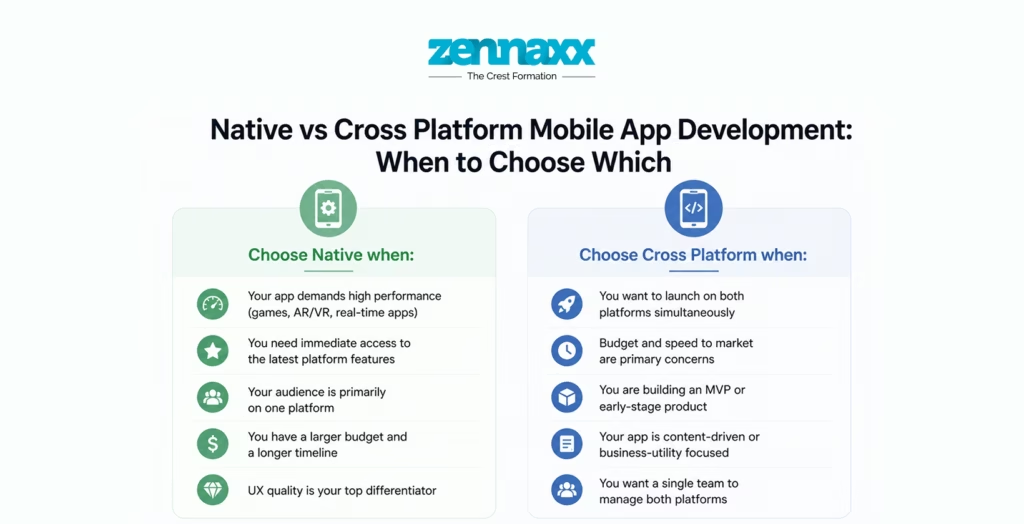
Choose Native when:
- Your app demands high performance (games, AR/VR, real-time apps)
- You need immediate access to the latest platform features
- Your audience is primarily on one platform
- You have a larger budget and a longer timeline
- UX quality is your top differentiator
Choose Cross Platform when:
- You want to launch on both platforms simultaneously
- Budget and speed to market are primary concerns
- You are building an MVP or early-stage product
- Your app is content-driven or business-utility focused
- You want a single team to manage both platforms
If you are still unsure, it helps to explore a deeper technical comparison. We recommend reading our guide on Flutter vs Native Development: Better ROI for Apps to understand the performance and cost trade-offs with one of today’s most popular cross platform frameworks.
How a Mobile App Development Company Can Help You Decide

Choosing between native vs cross platform apps is rarely black and white. It depends on your app’s features, your target users, your release timeline, and your growth roadmap. This is where working with an experienced Mobile App Development Company Canada makes a significant difference.
A seasoned development partner does not just code, they consult. They analyze your business model, competition, platform audience, and technical requirements to recommend the right approach from day one. This prevents expensive pivots mid-development and ensures your app is built on the right foundation.
At Zennaxx, we help businesses of all sizes navigate the native vs cross platform mobile development decision with clarity. From strategy and architecture to development and post-launch support, our team brings deep expertise across both approaches.
The Real Cost Behind the Decision
One thing businesses often underestimate is the long-term cost, not just the initial build. Native apps may cost more upfront, but if your app gains massive traction and needs to scale, the investment pays off. Cross platform apps may be cheaper to build but could require re-architecture later if your performance needs outgrow the framework’s capabilities.
This is why understanding the full native vs cross platform mobile app development picture including maintenance, scalability, and update cycles is so important before you commit.
Conclusion
The debate around native vs cross platform does not have a universal winner. The right choice is always the one that aligns with your specific goals, budget, timeline, and user expectations.
If you need the highest performance, deep platform integration, and a premium user experience, go Native. If you want speed, cost efficiency, and a unified codebase for both platforms, Cross Platform is your answer.
What matters most is making an informed decision backed by the right expertise. Whether you choose to go with dedicated Native Mobile App Development Services or a Cross Platform Mobile App Development approach, the key is to align your technical strategy with your business vision and build with a team that knows both paths well.
Ready to start? Let the experts at Zennaxx help you make the right call.
FAQs
Q1. Native vs cross platform – which is better for a startup?
For most startups, cross platform is the smarter starting point. It allows you to launch on both iOS and Android faster, at a lower cost, and with a single development team. Once your product is validated and scaling, you can always migrate to native for specific performance-critical features.
Q2. Do native apps perform better than cross platform apps?
In general, yes – native apps offer slightly better performance because they run directly on the platform without an intermediate layer. However, modern cross platform frameworks like Flutter have closed this gap considerably, and for the vast majority of app types, the performance difference is negligible to end users.
Q3. Is Flutter native or cross platform?
Flutter is a cross platform framework developed by Google. It compiles to native ARM code, which gives it performance closer to native than most other cross platform solutions. It is one of the most popular choices today for native vs cross platform mobile development decisions.
Q4. Which is more expensive – native or cross platform app development?
Native app development is typically more expensive because it requires building and maintaining two separate codebases, one for iOS and one for Android. Cross platform development can reduce costs by 30-40% since a single codebase serves both platforms.
Q5. Can cross platform apps access all native device features?
Most native device features like camera, GPS, push notifications, Bluetooth are accessible in cross platform frameworks through plugins and APIs. However, access to bleeding-edge hardware features may be delayed compared to native development, which gets immediate support from Apple and Google.